
From Ashes To $3.5B empire in Hollywood : A24 business model
Discover how independent film studio, A24 business model disrupted Hollywood to build a $3.5B empire. 4 actionable growth, branding, and marketing lessons for modern entrepreneurs.
CASE STUDIES
Arjun Vinod
7/19/202610 min read


"You don't beat industry giants by playing their game. You beat them by changing the rules."
For decades, Hollywood looked like one of the most impenetrable industries in the world. A handful of studios controlled everything—from financing and production to distribution and marketing. Companies like Disney, Warner Bros., Universal, Paramount, and Sony had billions of dollars, decades of experience, and global audiences that seemed impossible to challenge. For any newcomer, the odds of succeeding were almost nonexistent. Conventional wisdom suggested that competing with these giants required bigger budgets, bigger stars, and even bigger marketing campaigns. If you couldn't spend hundreds of millions of dollars on production and promotion, you simply didn't belong in the conversation. Most independent studios accepted that reality and remained small, surviving on the fringes of the industry.
Then came A24.
Founded in 2012 by Daniel Katz, David Fenkel, and John Hodges, A24 didn't arrive with blockbuster franchises or limitless capital. It wasn't backed by a media empire, nor did it own decades of valuable intellectual property. Instead, it entered Hollywood with something far more valuable: a completely different way of thinking.
Rather than trying to outspend the industry's biggest players, A24 questioned the assumptions that everyone else had accepted. While traditional studios chased the safest bets—sequels, superhero films, and familiar franchises—A24 invested in stories that larger companies considered too risky, too unusual, or simply too different. That strategy transformed the company from a small independent distributor into one of the most influential entertainment brands in the world.
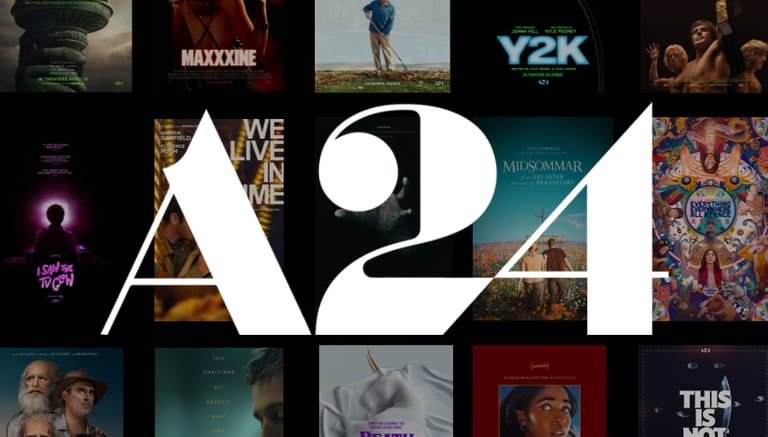
Today, the A24 logo carries a reputation that rivals some of Hollywood's oldest studios. Films such as Everything Everywhere All at Once, Moonlight, Lady Bird, Hereditary, The Whale, and Uncut Gems have become cultural phenomena, earning critical acclaim, commercial success, and multiple Academy Awards. More remarkably, audiences don't just watch A24 films—they actively seek them out. For many movie lovers, seeing the A24 logo is enough to buy a ticket before they even know the plot.
That level of trust is something most businesses spend decades trying to build. The company's reported multi-billion-dollar valuation is impressive, but the valuation isn't the real story. The real story is how a relatively small company entered one of the world's most competitive industries and managed to reshape it without matching the financial power of its competitors.
That's why A24's journey matters far beyond filmmaking.
Whether you're building a startup, launching an AI company, running a marketing agency, opening a restaurant, creating a SaaS platform, or growing a local business, the same principles apply. Markets may differ, but human behavior doesn't. Customers still crave authenticity, businesses still compete for attention, and entrepreneurs still face the challenge of standing out against larger, better-funded competitors. The biggest misconception in business is that success belongs to whoever has the largest budget.
History repeatedly proves otherwise.
Netflix didn't defeat Blockbuster by opening more stores.
Airbnb didn't compete with hotels by constructing more buildings.
Spotify didn't challenge record labels by owning music.
And A24 didn't try to become another Disney.
Instead, each of these companies identified opportunities that established players had overlooked. They focused on markets where innovation mattered more than size, creativity mattered more than resources, and customer understanding mattered more than advertising budgets.
That is exactly what A24 accomplished.
Its rise wasn't fueled by luck, nor was it simply the result of producing great films. Behind every successful release was a disciplined business strategy built around positioning, branding, efficient capital allocation, and an exceptional understanding of its audience. Every decision reinforced the same idea: don't become a smaller version of the market leader—become something the market has never seen before.
For entrepreneurs, that may be the most valuable lesson of all.
Too many founders spend their time studying competitors, trying to copy their products, lower their prices, or imitate their marketing. The result is a race to the middle, where businesses become nearly impossible to distinguish from one another. Customers rarely remember the second-best version of something that already exists.
A24 chose a different path.
Instead of asking, "How can we become another Hollywood studio?" they asked a much more powerful question:
"What if we built a studio that Hollywood itself isn't willing to become?"
That single shift in thinking changed everything.
The lessons behind that decision extend far beyond cinema. They offer a blueprint for entrepreneurs who want to build businesses that don't just survive alongside industry giants—but redefine the industries themselves.Let's explore the four strategies that transformed A24 from an overlooked startup into one of the world's most admired entertainment companies, and how you can apply the same thinking to your own business.
1. The Smartest Businesses Don't Compete—They Create Their Own Playing Field
One of the biggest mistakes entrepreneurs make is believing that success comes from taking market share away from the biggest companies. It sounds logical. If a large company has millions of customers, winning even a small percentage of those customers should create a successful business. In reality, this approach usually leads startups into a battle they are almost guaranteed to lose. Large corporations have advantages that smaller businesses simply cannot match. They have larger teams, deeper pockets, stronger supplier relationships, and decades of brand recognition. Trying to fight them on the same battlefield often means burning through resources before the business has a chance to establish itself.
A24 understood this reality from the very beginning. When the company entered Hollywood in 2012, the entertainment industry was experiencing a dramatic shift. Studios were becoming increasingly obsessed with blockbuster franchises. Superhero films dominated cinemas, sequels became safer investments than original stories, and studios allocated hundreds of millions of dollars to productions that were almost guaranteed to generate global box-office revenue. From a financial perspective, the strategy made sense. A single successful franchise could generate billions through ticket sales, streaming rights, merchandise, and theme park attractions.
However, every industry develops blind spots when everyone starts chasing the same opportunity.
As Hollywood focused its attention on giant productions, another segment of the market quietly became underserved. Independent filmmakers with original ideas struggled to find financial backing. Directors who wanted to tell unconventional stories were repeatedly told that their projects were "too risky," "too niche," or "not commercially viable." The industry had become exceptionally good at producing predictable entertainment, but it was slowly abandoning creative experimentation.
A24 didn't see this as a problem.
It saw it as an opportunity.
Instead of asking how they could produce a superhero film that competed with Marvel, they asked why so many talented filmmakers were being ignored. Instead of entering bidding wars for expensive intellectual property, they searched for stories that larger studios had already rejected. While competitors spent hundreds of millions chasing the biggest audience possible, A24 focused on serving a smaller audience exceptionally well.
That decision dramatically changed the economics of the business.
Producing or acquiring an independent film often required only a fraction of the budget of a traditional blockbuster. Because fewer companies were competing for these projects, A24 could secure remarkable creative talent without paying enormous premiums. More importantly, expectations were different. A film produced for $10 million didn't need to earn a billion dollars to become a success. Even moderate commercial performance could generate healthy returns while strengthening the company's reputation.
This approach wasn't simply about spending less money. It was about reducing competition.
In business, one of the greatest competitive advantages isn't building the best product in a crowded market—it's choosing a market where very few competitors are paying attention.
This idea is often referred to as the Blue Ocean Strategy, a concept developed by W. Chan Kim and Renée Mauborgne. Rather than fighting rivals in overcrowded "red oceans," businesses create entirely new demand in uncontested spaces where competition becomes almost irrelevant. A24 executed this strategy without constantly talking about it. The company didn't try to become another Disney because becoming another Disney would have guaranteed failure. Instead, it became the only A24.
The same principle appears repeatedly across modern business.
Netflix didn't begin by competing with movie theaters. Airbnb didn't build luxury hotels to challenge Marriott. Shopify didn't open retail stores to compete with Walmart. Canva didn't attempt to replace Adobe by creating software for professional designers alone. Each of these companies found customers whose needs weren't being fully addressed by existing market leaders.
Entrepreneurs often underestimate how powerful this approach can be because it feels counterintuitive. We naturally assume the biggest markets offer the biggest opportunities. Yet the opposite is frequently true. The largest opportunities often exist inside smaller, overlooked markets that established companies consider too insignificant to pursue. Large organizations are designed to optimize scale, not flexibility. They rarely move quickly enough to serve emerging niches because those markets initially appear too small to affect quarterly earnings.
For startups, those same niches can become the foundation of an entire business.
Before launching a product, founders often spend months analyzing competitors. They compare pricing, features, websites, and marketing campaigns, hoping to discover a slight improvement that will convince customers to switch. But asking, "How can I become better than my competitor?" is often the wrong question.
A far more valuable question is:
"Which customers are my competitors choosing not to serve?"
That simple shift in perspective can uncover opportunities hidden in plain sight.
A24's greatest innovation wasn't a revolutionary filmmaking technique or an enormous financial investment. It was the ability to recognize that while Hollywood chased certainty, there was tremendous value in embracing originality. The company built its reputation by betting on ideas that others overlooked, proving that sometimes the most profitable market isn't the one everyone is fighting over—it's the one everyone else has already walked away from.
For entrepreneurs, the lesson is impossible to ignore. You don't need to defeat the largest company in your industry to build an extraordinary business. More often than not, you simply need to discover the customers they have forgotten and serve them better than anyone else.
That was the first move in A24's rise.
It certainly wasn't the last. The company's next decision would prove even more remarkable—not because it changed the movies they made, but because it completely changed how people thought about the company itself.
2. Building a Brand That People Believe In, Not Just Buy From
In most industries, customers rarely pay attention to the company behind the product. People buy a smartphone because it's an iPhone, not because it was designed by Apple. Moviegoers have traditionally behaved the same way. They bought tickets because of the actors, the director, or the franchise, while the production studio remained almost invisible.
A24 challenged that assumption.
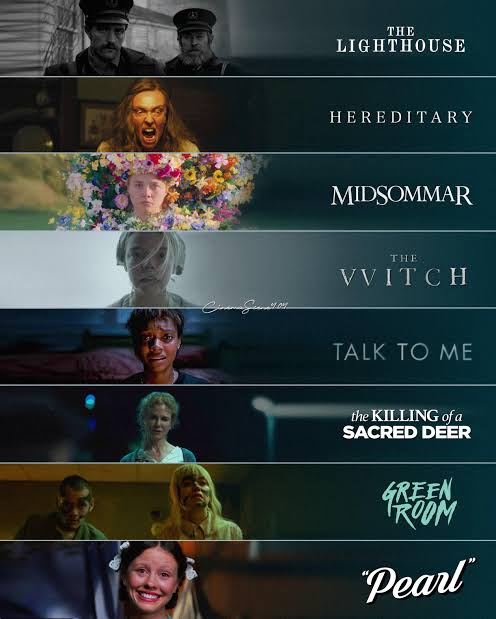
Over time, the company transformed its logo into a promise. Instead of representing a business that simply financed films, the A24 name began to signal a particular kind of experience. Audiences came to expect stories that were emotionally complex, visually distinctive, and willing to take creative risks. The result was something few entertainment companies had ever achieved: people started watching films because they were A24 films.
That level of trust cannot be bought through advertising alone. It is earned through consistency. Every successful release reinforced the idea that A24 valued originality over formulas, giving audiences confidence that the next project would offer something worth experiencing. Eventually, the brand became larger than any individual movie.
The company wisely expanded that relationship beyond the cinema. Screenplays, limited-edition books, collectibles, apparel, podcasts, and online content allowed fans to engage with the brand long after leaving the theater. What started as a film studio slowly evolved into a cultural community, where customers didn't just consume products—they identified with the values the company represented.
This is where many businesses misunderstand branding. A logo, color palette, or catchy slogan doesn't create loyalty. Customers remain loyal because a brand consistently reflects something they believe in. The strongest brands make people feel like they're part of a shared identity rather than simply completing another transaction.
For entrepreneurs, the lesson is clear. Stop asking how your business can become more recognizable and start asking how it can become more meaningful. Products can always be copied. Prices can always be undercut. But a brand that earns genuine emotional trust becomes incredibly difficult to replace.
3. Winning Attention Without Spending Like the Competition
One of A24's greatest strengths wasn't having a massive marketing budget—it was understanding that attention is earned long before it's purchased. While larger studios invested heavily in television commercials, billboards, and expensive promotional tours, A24 focused on creating moments that people genuinely wanted to talk about.
A perfect example came during the release of Ex Machina. Rather than relying solely on traditional advertising, the company created a Tinder profile for Ava, the film's AI character, during the SXSW festival. People who matched with her believed they were chatting with an attractive stranger, only to discover they were interacting with a character from the upcoming movie. The campaign quickly spread across social media, technology blogs, and news outlets, generating conversations that reached millions of people without requiring blockbuster advertising budgets.
That campaign perfectly reflected A24's philosophy. The objective wasn't simply to promote a movie—it was to create an experience worth sharing. Every viral conversation became free publicity, and every article written about the campaign extended its reach even further.
Modern consumers are overwhelmed with advertisements every day. Most are forgotten within seconds because they interrupt rather than engage. Stories, however, travel naturally. People share ideas that surprise them, make them laugh, or spark curiosity. That's why the most memorable marketing campaigns often come from companies with the smallest budgets—they have no choice but to rely on creativity instead of spending.
Entrepreneurs can apply this mindset regardless of industry. Rather than asking how much to spend on advertising, ask what would make customers voluntarily tell someone else about your business. A recommendation from a friend, a memorable customer experience, or a clever campaign often creates far greater impact than another paid advertisement ever could.
4. Staying Lean While Everyone Else Gets Heavy
As businesses begin to grow, there's often a temptation to look bigger than they really are. Larger offices, expanding payrolls, expensive infrastructure, and long-term commitments can create the impression of success, but they also increase financial pressure. Many startups don't fail because they lack customers; they fail because their fixed costs grow faster than their revenue.
A24 resisted that temptation for years.
Instead of building enormous production facilities or maintaining expensive long-term contracts, the company remained remarkably flexible. It partnered with talented creators, worked on projects individually, and invested its capital where it mattered most—the stories themselves. By avoiding unnecessary overhead, A24 preserved the freedom to move quickly, adapt to changing opportunities, and take creative risks that larger organizations often couldn't justify.
That flexibility became one of its greatest competitive advantages. When audience preferences shifted, A24 could respond without being constrained by the massive operational structures that slowed traditional studios. Its resources stayed focused on creating value rather than maintaining assets.
This philosophy extends far beyond filmmaking. In today's business environment, technology has made it possible for even small companies to operate globally without owning everything themselves. Cloud software, outsourced specialists, strategic partnerships, and AI-powered tools allow founders to remain agile while competing with much larger organizations.
The lesson isn't that businesses should avoid growth. It's that growth should strengthen flexibility rather than eliminate it. Companies that stay lean make decisions faster, recover from setbacks more easily, and are better positioned to seize opportunities when markets change. In many cases, agility becomes a far more valuable asset than size itself.